
Turning Smart Ideas into Products People Actually Use
Almost every business today has an AI idea sitting on a whiteboard. Very few of those ideas make it into a product that customers trust and teams rely on every day. The gap between a clever demo and a dependable product is exactly where AI product engineering lives.
What Is AI Product Engineering?
Traditional software follows rules written in advance. If X happens, do Y. AI-powered products work differently: they study patterns in data, adapt to new situations and improve over time.
Adaptive Intelligence vs. Static Rules
That difference changes how a product must be built. The data has to be clean and reliable. The models have to be tested against real-world behaviour, not just lab conditions.
Full-Lifecycle Care & Drift Prevention
The product needs continuous monitoring after launch, because an AI system that isn’t maintained slowly drifts away from the reality it was trained on. AI product engineering covers all of it, from the first conversation about a business problem to the long-term care of the finished product.
Why It Matters Right Now
Businesses that treat AI as a side experiment usually end up with pilots that never scale. Businesses that engineer AI into their products and processes see the difference in everyday results:
Faster Operations
Routine work is handled automatically with intelligent automation, cutting operational bottlenecks and freeing high-value teams.
Sharper Decisions
Messy data becomes clear, usable insight delivered directly into the workflows of decision-makers when it counts most.
Better Customer Experiences
Products proactively respond to what people actually need, delivering seamless personalization and real-time responsiveness.
Shorter Development Cycles
Intelligent automation and reusable enterprise components eliminate repetitive manual development, speeding up time to market.
Core Services in AI Product Engineering
From initial strategy to live production integration, security, and full-lifecycle product stewardship.
1. AI Product Consulting and Strategy
Every strong AI product begins with a sharp question: what problem is worth solving? This stage focuses on finding use cases where AI delivers measurable value, checking technical feasibility, and shaping an architecture that fits the business roadmap. A clear plan with defined milestones saves months of rework later.
2. AI Product Development
Here, requirements turn into working software. Custom AI systems are built around specific workflows and industry needs, not forced into generic templates. Enterprise-ready builds are designed to plug into existing infrastructure while leaving room to grow.
3. AI Product Integration
A brilliant AI model is useless if it can’t talk to the tools a business already uses. Integration connects AI with ERP, CRM, cloud platforms and internal applications, without disturbing daily operations. Modular architecture, built on APIs and microservices, allows features to roll out in stages.
4. AI-Based Automation and Process Optimization
From document processing to smart recommendations, automation takes over repetitive tasks so people can focus on judgement and creativity. The best systems keep learning from real usage, which means they get more useful the longer they run.
5. AI Security and Compliance
Trust is the foundation of any AI product. Data privacy, access controls, audit trails and responsible-AI practices need to be part of the design from day one, not patched in before launch. Depending on the industry, this can involve frameworks such as GDPR, HIPAA, SOC 2, ISO/IEC 27001 and the EU AI Act.
6. AI Product Management
Launch day is a milestone, not the finish line. Ongoing product management keeps business teams and technical teams aligned, tracks performance, retrains models with fresh data and ensures the product evolves with the business.
Where AI Product Engineering Creates Impact
AI delivers the most value when it is shaped around the realities of an industry:

Healthcare
Clinical decision support, automated medical coding, patient intake and triage.

Finance
Fraud and anomaly detection, risk modelling, compliance automation.

Retail & eCommerce
Demand forecasting, personalised recommendations, multilingual support agents.
Manufacturing
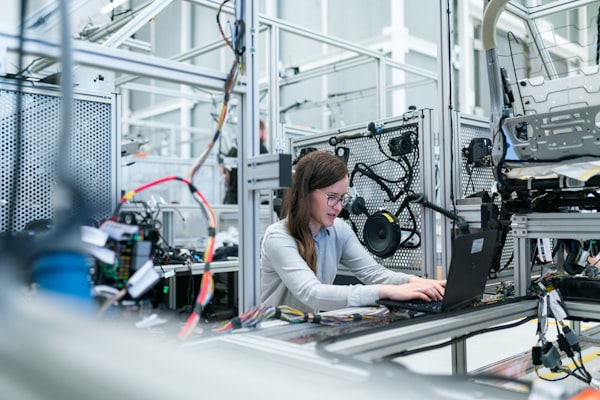
Predictive maintenance, production-line optimisation, vision-based quality checks.
Logistics
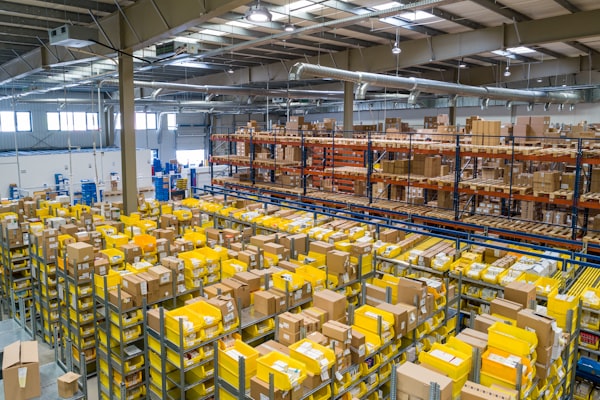
Route optimisation, real-time fleet intelligence, supply chain forecasting.

Education
Adaptive learning paths, automated assessment, personalised tutoring.

Insurance
Faster claims triage, automated underwriting, tailored policy suggestions.

Energy & Telecom
Outage prediction, grid analytics, network fault detection.
The Technology Behind Modern AI Products
A dependable AI product rests on a well-chosen technology mix. Depending on the goal, that might mean an LLM, vision model, multimodal system or fine-tuned domain model.
From Idea to Launch: How the Process Works
A well-run AI product journey usually follows these stages. A simple prototype takes 6–10 weeks; full enterprise-grade products take 4–6 months.
Requirements and Planning
Define strategic business goals, technical scope, delivery timelines, and clear, measurable success metrics.
Data Collection & Preparation
Gather, clean, sanitize, and organize the proprietary data that models will learn from in production.
UI/UX Design
Shape an experience that feels simple, intuitive, and frictionless, even when the technology underneath is complex.
Model Development & Training
Select, benchmark, train, and fine-tune algorithms and foundation models tailored for your specific use case.
Custom Feature Development
Build the unique, proprietary capabilities and business logic that off-the-shelf tools can’t provide.
Testing and Validation
Rigorously check accuracy, latency, and reliability under real-world scenarios and adversarial edge cases.
Integration and Deployment
Connect with existing ERP, CRM, and internal databases, rolling out modular features with minimal disruption.
Launch and Ongoing Support
Continuously monitor live performance, eliminate model drift, and retrain as real-world data evolves.
What to Look for in an AI Product Engineering Partner
Choosing a partner is one of the most important decisions in the whole journey. A few signs of the right fit:
Production Experience, Not Just PoCs
Deep expertise in taking AI pilots out of sterile lab environments into high-traffic, mission-critical production environments.
Deep Industry Understanding
Domain knowledge ensuring the solution respects the regulatory rules, workflows, and operational nuances of your sector.
Security and Compliance Built In
Enterprise data privacy, role-based access controls, and compliance frameworks engineered into architecture from day one.
Systems Designed to Evolve
Built with continuous feedback loops, strict model version control, automated telemetry, and monitoring against drift.
Clear, Transparent Communication
Technical and business teams speaking the exact same language — transparent milestones, clear timelines, and zero jargon.
Answers Before You Ask
Ready to Build AI That Actually Works?
The businesses that win with AI aren’t the ones with the most experiments. They are the ones that turn a strong idea into a secure, scalable and useful product. If an AI idea is waiting to become real, the right engineering partner can help shape it into something customers value from day one.